Home EV Charging
Level 2 circuits for garages, carports, and driveways, including hardwired or plug-in chargers when the equipment and site are a match.

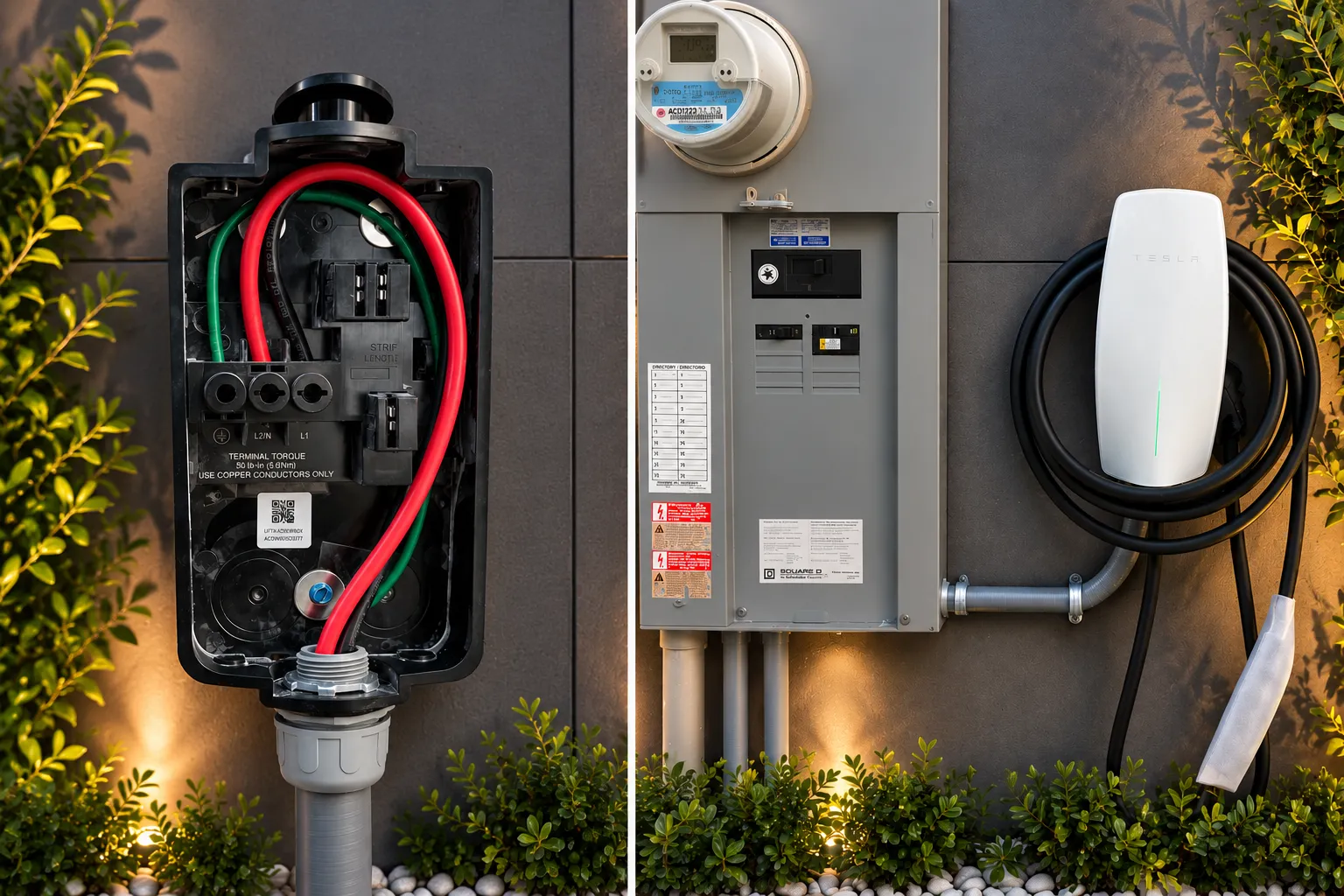
A Level 2 EV charger is a dedicated 240-volt charging point for a home garage, driveway, or commercial parking area. All Star Electrical Contractor installs the electrical work for EV chargers on residential and commercial properties in Miami-Dade County under Florida electrical license ER13016751.
The charger is only one part of the job. The panel has to have capacity, the circuit has to be sized for the unit, and the mounting location has to reach the vehicle without an unsafe cord run. Hardwired chargers and cord-and-plug units each have different electrical requirements. We review the equipment you plan to use, the parking layout, and the existing service before recommending a circuit, a disconnect, or a panel change.
Properties that already carry HVAC, electric cooking, or other large loads may not have spare capacity. In those cases a panel replacement, a subpanel, or a service upgrade may be needed before the charger can be added. We confirm that on site. We do not claim manufacturer partnerships or compatibility with every charger model.
We start with the parking location and the existing electrical service, then size the circuit to the charger requirements. Permit and inspection needs vary by municipality in Miami-Dade County. When they apply, we discuss them during the estimate. Permit and inspection results are determined by the authority having jurisdiction.
We inspect the panel, the route to the parking area, and the charger’s published electrical requirements so the recommended circuit matches the property.
You receive a written description of the circuit, mounting location, and any panel work required, with a price, before installation is scheduled. If a permit is required, we include that in the plan.
The dedicated circuit is installed, the charger is connected as specified, and the work is tested. When an inspection is required, we coordinate it with the local building department.
EV charger electrical work is used at homes, workplaces, and commercial parking areas that need a dedicated charging circuit.
Level 2 circuits for garages, carports, and driveways, including hardwired or plug-in chargers when the equipment and site are a match.
Dedicated charger circuits for offices, retail parking, and workplace or fleet charging preparation where the existing service can support the load.
Load review when a charger may require a new breaker space, a subpanel, or a service upgrade before installation can proceed.
A typical EV charger installation includes evaluation of the existing panel, a dedicated circuit sized for the charger, and testing of the completed connection. Panel or service work is included when it is required to support the charger.
Installations are performed to applicable NEC and Florida building-code requirements. If a permit or inspection is required for your municipality, we will discuss it during the estimate and coordinate it where required.
A Level 2 charger is the usual choice for overnight home charging because it uses a dedicated 240-volt circuit and charges faster than a standard household outlet. Whether it is the right fit depends on the vehicle, how you park, and what the existing electrical service can support. We review that during the site assessment.
Yes. A Level 2 charger is an added load and is installed on its own circuit, sized for the charger rating. Sharing a general-purpose circuit is not the correct installation method. Circuit size and breaker rating are confirmed from the charger requirements and the panel evaluation.
Not always. Some panels have spare capacity and an available space. Others do not, especially if the property already carries HVAC, electric cooking, or other large loads. We evaluate the panel and the calculated load before recommending a charger circuit, a subpanel, or a service upgrade.
Often yes, if the unit is suitable for a professional electrical installation at the property. We review the manufacturer’s electrical requirements, the mounting location, and the existing service. We do not claim compatibility with every charger brand or model. If the equipment is not a match for the site, we will say so before work is scheduled.
Common locations include a garage, carport, exterior parking stall, or a commercial parking area with a suitable wall or pedestal location. The route from the panel, weather exposure, and vehicle parking position all affect the plan. We confirm the location during the site visit.
A permit is often required, but the rule depends on the municipality and the scope of work. Miami-Dade County includes multiple permitting jurisdictions. We review that during the estimate and coordinate permitting when it applies. Approval is decided by the local building department.